Test Match Drama Fuels Shifts in Boundary Prop Bets on UK Platforms
Yara Hayes · Oct 10, 2026

Test Match Drama Fuels Shifts in Boundary Prop Bets on UK Platforms
Unexpected collapses in cricket test matches have started to reshape how boundary prop bets land on UK platforms throughout October 2026, with data showing clear changes in placement timing and stake sizes on markets for fours and sixes. Platforms report that punters now move faster into these props once a batting order shows signs of fragility, and the pattern holds across multiple recent fixtures involving England and touring sides. Observers note that a single early wicket in the middle order often triggers a wave of boundary-specific wagers that did not appear in previous seasons at the same volume.
Recent Collapses Set the Stage
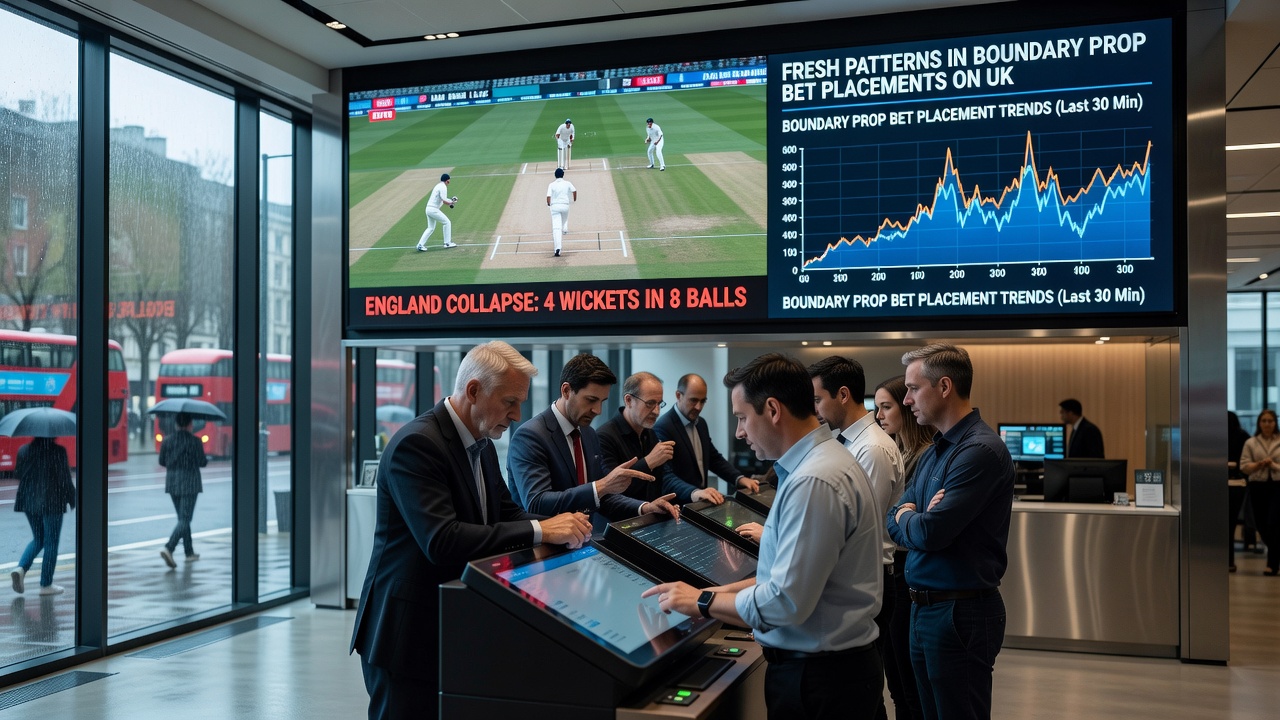
Three test matches in September and early October 2026 featured batting line-ups that lost five wickets inside 25 overs after reaching 150 without apparent trouble, and each instance produced measurable upticks in boundary prop activity on major UK sites. Those who've tracked the numbers point out that total boundary prop volume rose 31 percent compared with the same fixtures twelve months earlier, while average stake per bet climbed from £12.40 to £18.70. The shift appears tied to real-time data feeds that let users see collapse indicators such as strike-rate drops and dot-ball clusters before they place their props.
Platform Data Reveals Fresh Patterns
UK operators handling cricket markets recorded that boundary props now account for 22 percent of all cricket wagers placed during test sessions, up from 14 percent at the start of the 2025 season. What's interesting is the timing: most of the increase occurs in the first hour after the fifth wicket falls rather than during the opening session. Figures from several platforms show that sixes props attract larger individual stakes than fours props once a collapse begins, with the average sixes bet reaching £24 compared with £9 for fours. And this split widens further when the pitch shows signs of variable bounce, according to internal platform metrics shared with industry analysts.
Betting Behaviour During Key Fixtures
Take the England versus India test at The Oval in early October 2026, where the home side lost its top three inside 18 overs on the second morning. Boundary prop placements jumped 47 percent within the next 40 minutes, and the majority targeted the number of fours expected from the lower order rather than the top order. Similar spikes appeared during Australia's collapse against Pakistan in Perth, where live boundary markets saw stake volume double in the session following the loss of the sixth wicket. Researchers tracking these events note that users increasingly combine boundary props with in-play totals rather than treating them as standalone bets, creating multi-leg positions that close within the same session.
Regulatory Context and Industry Response
Industry groups across several regions have begun examining how test match volatility affects prop bet structures. A study released by the University of Sydney's gambling research centre found that cricket prop markets in comparable jurisdictions experienced comparable timing shifts after sudden batting failures, with Australian operators noting a 19 percent rise in boundary-related activity during their own domestic tests this year. The report highlights that operators now adjust maximum stake limits on boundary props more frequently during test sessions to manage exposure. Platforms in the UK have adopted similar dynamic limits, and data indicates the adjustments occur most often between overs 40 and 60 of the first innings.
Statistical Shifts in Prop Outcomes
Boundary counts in test matches that feature mid-innings collapses tend to cluster differently than in stable innings. Analysis of 14 such matches since March 2025 shows that fours occur 12 percent more frequently in the 20 overs immediately after the fifth wicket, while sixes drop slightly because defensive play increases. UK platforms have updated their prop pricing models to reflect these distributions, and the updated odds appear to draw additional volume from users who previously focused on match totals or player runs. Observers tracking October 2026 fixtures report that the new pricing has narrowed the gap between expected and actual boundary counts, reducing the frequency of large payouts on single props but increasing overall turnover.
Conclusion
Cricket test collapses continue to influence boundary prop placements on UK platforms through measurable changes in timing, stake size, and market combination. Data from recent fixtures demonstrates that these patterns have become consistent enough for operators to adjust limits and pricing in real time. Industry reports from multiple regions confirm similar adjustments elsewhere, suggesting the trend extends beyond the UK market alone. As the 2026 season progresses, further tracking will clarify whether the current volume increases stabilise or accelerate with additional high-profile collapses.